+77772555856
 Написать нам



Kazakhfilm Begins Implementation of 3-Year Modernization Plan
 18 Мая 2021
 1252
1252
 Культура
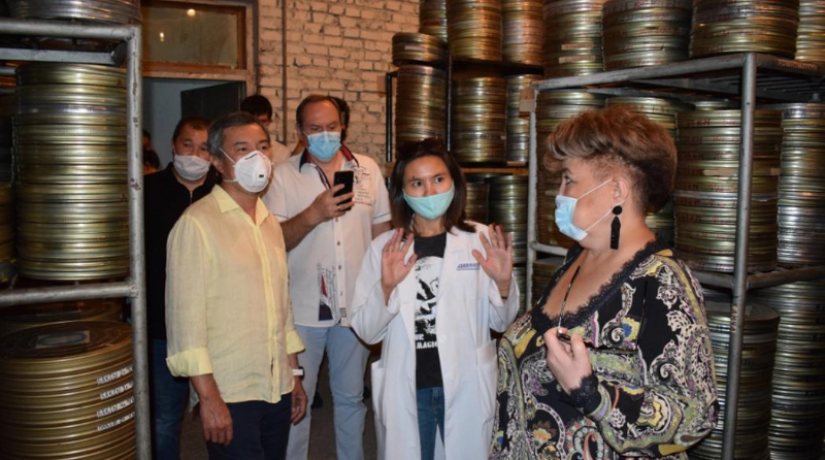 Фото:Kazakhfilm studio
Almaty. May 18. Information Center - Kazakhfilm studios have begun the modernization process that is expected to last 3 years and incorporate new technical equipment, reconstruction of engineering networks and buildings and a new film set. Kazakh Minister of Culture and Sports Aktota Raimkulova shared the plans during her meeting with the Central Communications Service, The Astana Times reports.
The goal of the modernization project is to make Kazakhfilm, which operates out of Almaty, fully self-sufficient and function as a central film-making facility for a new generation of film creators.
The history of Kazakhfilm dates back to 1934 when a newsreel studio was first established in Alma-Ata, present day Almaty and the then capital of the Kazakh SSR. The studio started out by producing documentary films. In 1941, Alma-Ata Film Studio was established for the production of full-length feature films.
The initial boom of the film industry in Kazakhstan occurred during World War II when major film studios of the Soviet Union such as Mosfilm and Lenfilm were evacuated to Alma-Ata, which became responsible for producing 80 percent of all Soviet films until 1944.
In 1960, the Alma-Ata feature films and newsreels studio was renamed Kazakhfilm with Kazakh director and actor Shaken Aimanov as the first secretary of the Constituent Congress of the Kazakh Cinematographers Union.
The growth of Kazakh cinematography languished after the country gained independence due to the challenge of finding a new structure for the production and screening processes in the context of the unstable economy of the 1990s.
The situation changed by 2005 when Kazakhfilm produced its first blockbuster action movie “Nomad.” The historic drama offset a period of independent Kazakh cinematography that looked back and focused its attention on past stories of the Kazakh Khanate and ancient traditions.
In 2006, Kazakhfilm shifted its corporate structure from a national company to a joint-stock company. While big-budget history films, including “Mongol” (2007) and “Myn Bala” (2011), continued to captivate the country’s audience, the Kazakh creators started to diversify their stories with more projects focusing on modern events being funded and produced. “Racketeer” (2007) and “Tale of the Pink Bunny” (2010) both offered their own social commentary on life in post-Independence Kazakhstan and became staples of the Kazakh popular culture at the time. “Racketeer” served as a break-out movie for Kazakh director and producer Akan Satayev who now serves as the President of Kazakhfilm.
Today, Kazakhfilm continuously produces dozens of films per year with a wide variety of stories. The studio itself consists of an animation studio, DOLBY dubbing studio, video editing studio, speech and sound studio, museum of Kazakh cinema named after Shaken Aimanov and the star alley of Kazakh cinematography. Kazakhfilm also reportedly offers grants and scholarships to support young filmmakers.
Despite the coronavirus pandemic and interrupted production, starting from 2020, the film studio managed to produce 27 films, which took part in 65 international film festivals and were awarded 32 prizes. In 2021, 14 films of the studio were shown at 7 international film festivals.
One of the recent successful projects of Kazakhfilm is the historical drama “Tomiris” which received the Nouveau Genre Great Prize in the International Feature Film Competition at France’s 26th L’Étrange Festival in September 2020, as well as the Taurus World Stunt Award in the Best Action in a Foreign Film category in November last year. The film is now available on Amazon Prime Video in U.S. and Canada.
The film studio recently encountered budget problems aggravated by the pandemic. In 2017, the Mazhilis (lower chamber) of Kazakhstan’s Parliament voted to stop subsidizing Kazakhfilm. In 2020, it was reported that Kazakfilm had financial troubles due to the delayed process of its privatization and no stable source of funding. In addition, the studio was in need of serious renovation with the last repairs having been done 36 years ago.
The measures undertaken by the film studio so far include switching the operations to natural gas, which was done through a $234,000 sponsorship deal and resulted in $117,000 worth of budget savings. Renovations of the administrative building of Kazakhfilm involved an installment of video surveillance and access systems, as well as the repair of power cables.
With the current modernization project, Kazakhfilm, which already has the largest digital studio in Central Asia, is planning to be converted to full digital format with renovated facilities. In July 2020, Satayev announced the studio’s plans to create a special atmosphere that will enhance the efficiency and comfort of the work of its creators. Upon completion of the modernization, the studio is expected to fund its own projects and act independently, without state subsidies.
“My team and I will make every effort to get the film studio on its feet and for it to become a real locomotive of the film industry in our country,” said Satayev on his official Instagram page in October 2020.
Wider reforms planned for the film industry in the country involve the development of the Unified Monitoring of Films in the Territory of the Republic of Kazakhstan (UAIS) information system. Developed with the Kazakh Ministry of Digital Development, Innovation and Aerospace Industry, the project will aid the systematization and accounting efforts of Kazakh film studios to provide reliable data on box office sales and successful film screenings.
The Kazakh government is also working on amending the bill on cinematography in accordance with the 2021 legislative work plan. “A working group has been created, which includes representatives of interested government bodies, public organizations, artists, and cinematography. At the moment, the working group has met more than 10 times to discuss problematic issues of cinematography, including the mechanism for creating film commissions, dubbing films in the Kazakh language and other topical issues,” said Raimkulova.



ru Человек-эпоха: Куаныш Ажмагамбетов и его вклад в развитие промышленности Жетісу
ru Займы под 120% годовых: дело о незаконном кредитовании передано в
ru Выставка тепличных технологий Grow Expo Astana 2026 пройдет 8-10 апреля
ru Жаркентская мечеть включена в предварительный список Всемирного наследия ЮНЕСКО
ru В Минтруда обсудили новые механизмы трудоустройства лиц с инвалидностью
ru Схема обмана студентов через соцсети раскрыта в Шымкенте
ru В Акорде состоялась церемония встречи Президента Сербии
ru Мобильный ЦОН: сколько услуг казахстанцы получают через приложение
ru Подростки с особыми потребностями осваивают профессию кондитера в Карагандинской области
ru КНБ ликвидировал канал контрабанды наркотиков
ru Охлажденное мясо птицы можно будет хранить в 3 раза дольше
ru Солдат Национальной гвардии разработал цифровой портал для военнослужащих
ru Учащиеся 0-9 классов второй смены переведены на дистанционный формат обучения
ru Пенсионерка едва не лишилась более 2 млн тенге в Павлодаре
ru Строительство нового завода Coca-Cola Içecek в Актобе планируется начать в
ru Один из крупнейших бизнесменов Польши построит фармзавод в Шымкенте
ru Стартует прием заявок на премию Президента Республики Казахстан «Алтын Сапа»
ru Президент Сербии Александр Вучич посетит Астану 26-27 февраля
ru Глава государства направил поздравительную телеграмму Эмиру Кувейта
ru МТСЗН РК опровергло фейк о ежегодном отпуске
ru В Алматы открылась юбилейная выставка о мастерах кино
ru В Астане вынесен приговор интернет-мошеннице
ru Олжас Бектенов о выделении 1 трлн тенге на посевную кампанию
ru Олжас Бектенов поручил упростить и оцифровать процедуру льготного кредитного финансирования
ru В Казахстане продолжается подготовка к паводковому периоду
ru В Алматы продолжают расширять фонд студенческих общежитий
ru Почти 3000 га сельхозземель возвращены в госсобственность в Туркестанской области
ru Марихуана в особо крупном размере изъята в ВКО
ru Олжас Бектенов провел заседание Совета директоров «Самрук-Қазына»
ru Из Турции экстрадирован подозреваемый в серийном мошенничестве